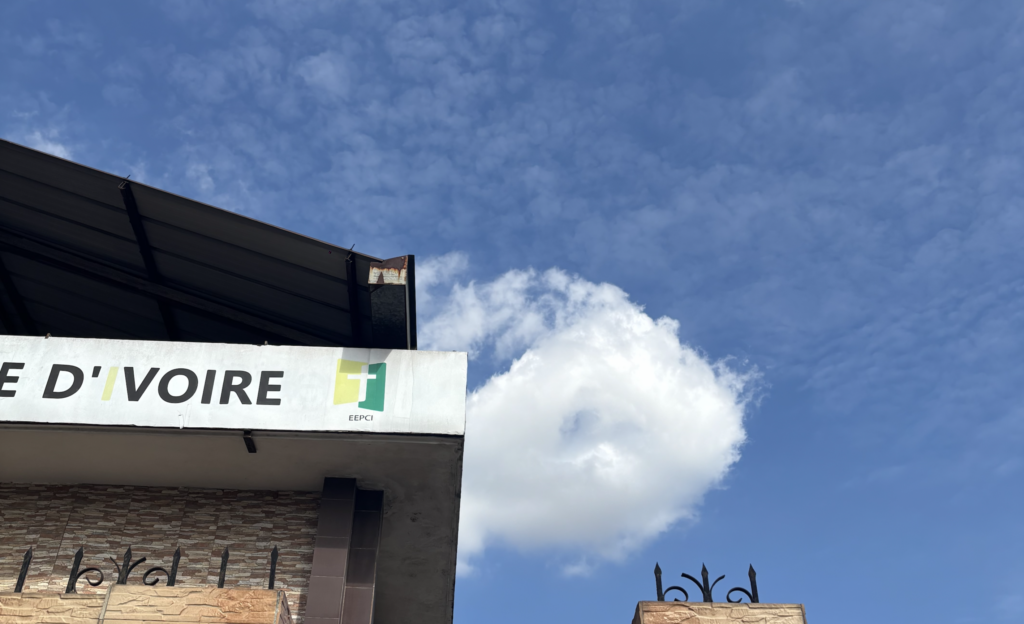
I believe in God, though I am far from being religious. I was born into Christianity and grew up attending a Presbyterian church, but after leaving my hometown for university—moving to a different city in a different country—I gradually lost touch with the traditional rhythm of Sunday worship. As I studied, encountered new ideas, and began forming my own understanding of the world, I found myself struggling with the idea of God being restricted to a single religion.
Who is God? Is He Christian, Muslim, Buddhist—or does He have a religion at all? I grew up in a Christian community, so the Christian God is what I know. But I have never been fully at peace with the idea that Christianity alone holds the truth. If God truly exists, if He is a God of love, why should access to truth depend on something as arbitrary as the circumstances of our birth? Had I been born into Islam, I might have felt Islam was the truth. Had I been raised Buddhist, Buddhism would have seemed true. That would make access to God contingent on circumstance, on upbringing, on the limits of human understanding.
These questions have followed me for years. When I tried discussing them with friends and family, I often felt misunderstood. Their answers—“pray more,” “experience God’s love”—were well-intentioned but felt dismissive of my questions. At times, I even felt a twinge of guilt, as if I were some dark presence tainting those innocent white doves with my doubt and skepticism. Why am I so complicated? I would console myself that this need to question could itself be a form of seeking—a way to draw closer to God rather than reject Him.
I am currently visiting Ivory Coast, the country where I spent my childhood, and a few days ago I had a brief encounter with a woman whom I had known since childhood. She welcomed me warmly to her house and we shared updates so she learned about my preparation for a public service exam. She advised me to prioritize serving God, reminding me that the greatest love and happiness come through service. She encouraged me to join a Christian community and to use whatever I had to serve others. And she shared this passage:
But seek first his kingdom and his righteousness,
and all these things will be given to you as well.
Therefore do not worry about tomorrow,
for tomorrow will worry about itself.
Each day has enough trouble of its own.
Matthew 6:33-34
Normally, I would have resisted her advice. I have always felt uneasy when people try to tell others what to do—whether to go to church or to believe in God. To me, the truest way to guide someone is not through words or instruction, but through example: by living your faith, showing it in your actions, and letting your life speak for itself. Faith, in its deepest sense, is something caught through presence and witness, not demanded through persuasion.
But I was not offended. Something in that encounter touched me, bringing a sense of peace I had long sought. I realized that much of my fear had been rooted in a need to be on the “right” team, surrounded by the “right” people. I fretted the idea of being in the “wrong” environment, being brainwashed and trapped by the “wrong” principles. But nothing in this world is perfectly right. Nothing fully embodies God. We may only see imperfect reflections Him. Perhaps I had been searching for a perfectly pure white dove that does not exist in this world.
Once I accepted that, a weight lifted. Religion, churches, and people of faith will always be flawed—but that does not diminish God’s presence. What matters is what I feel in my heart: gratitude, love, and awareness of His grace. I had been demanding certainty beyond my capacity. Waiting for 100% assurance before committing—to God, to faith, or even to love—is impossible. Life, and faith, require trust. Like marriage, faith requires stepping forward without guarantees, trusting what we know in our hearts.
So this is where I am with God. I do not know whether He belongs to Christianity, Islam, or Buddhism. I only know that He exists beyond these distinctions, watching over us with love. Every religion, in its own way, speaks to that love. Perhaps religion is like language: many forms, many expressions, all capable of conveying truth. Being Christian—or belonging to any faith—is not about choosing the “right team.” It is about seeking God, living with love, and recognizing His presence in an imperfect world.
I still wrestle with a subtle tension: how can I believe in my truth while acknowledging that it may not be universal? How can I follow God and Jesus while accepting that God is present wherever someone genuinely seeks Him? I do not have all the answers. But I have found peace in the search itself. I have learned that faith does not require perfection, love does not demand certainty, and the act of seeking—honest, sincere, and open—is itself a path to God.
Starting this week, I’ll be going to church after twelve years of secular Sundays. I don’t know where it will lead—perhaps it will raise more questions, perhaps it will bring peace. I am uncertain, but I trust that God has guided me to take this step, and that whatever unfolds is part of His plan. Only He knows what He intends for me, and I am learning to follow with an open heart, embracing the journey without needing all the answers.
Leave a Reply