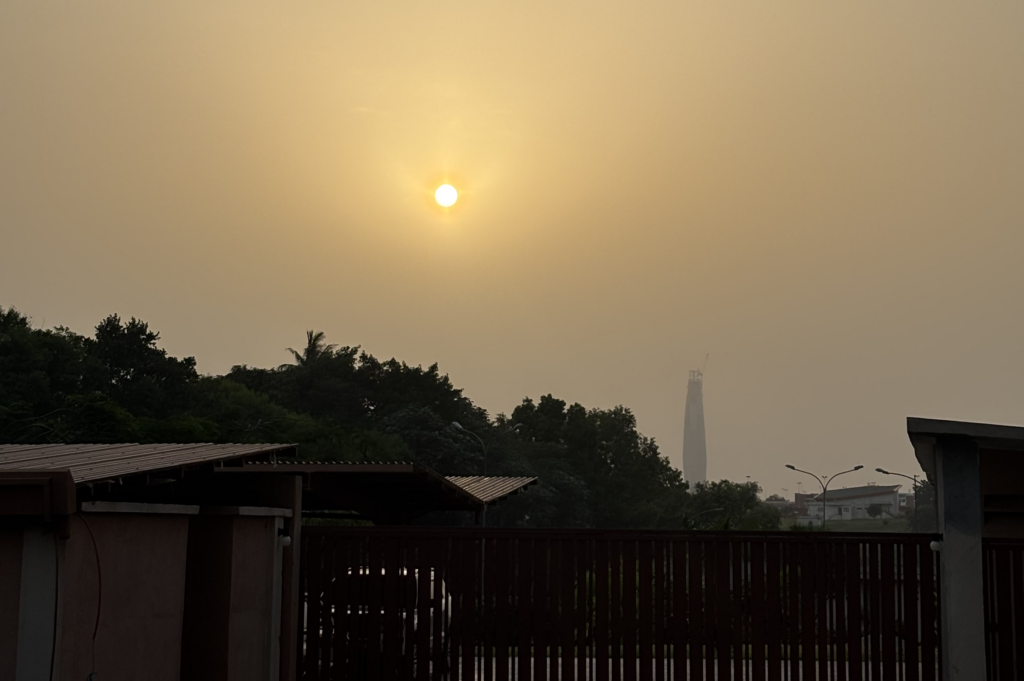
For the past two weeks, I visited Ivory Coast, the country in West Africa where I spent my childhood and adolescence. I had not been back for ten years, and when I first arrived, I was struck by how much it had changed. The roads were wider and cleaner, buildings taller and more refined, and people’s lifestyles had become more technologically integrated. People themselves had changed as well. Children had grown old enough to attend school, the energetic adults of my youth had begun to lose some of their vigor, and those who once labored in hardship now enjoy the steady fruits of their diligence, having progressed to running businesses of their own. In just ten years, so much had changed—something both wonderful and a little saddening at the same time.
One of my priorities while in Ivory Coast was to visit Jean Mermoz, the French international school I attended from Pre-K to fifth grade. The campus carries strong traces of French colonial history, as it was originally a French airport later converted into a school. During the Ivorian Civil War in 2004, it was one of the French sites that was targeted and burned but he rebels. The current campus is a reconstruction completed in 2014.
I felt compelled to visit, to return to those beautiful childhood memories. I entered the campus with eager anticipation. After the war, security had become much stricter. The entrance now consisted of a double-gated system: first, an outer gate leading into a small, enclosed space where one waits for clearance before the inner gate opens. I passed through this checkpoint, only to be denied access at the administration office. I needed to be verified, but I could not be. I was not a parent or guardian, nor a prospective visitor. I showed them photographs from my childhood as proof that I had once belonged there, that I posed no threat, that I had come only to revisit my past. They apologized and said they wished they could help, but they no longer had records from over twenty years ago—most had been lost in the fire during the war. I could not be verified. They were kind enough to let me exit the campus by a route that took me through the school grounds, rather than the highly secured back-path I had used to enter the office. This walk to the exit gate lasted about five seconds.
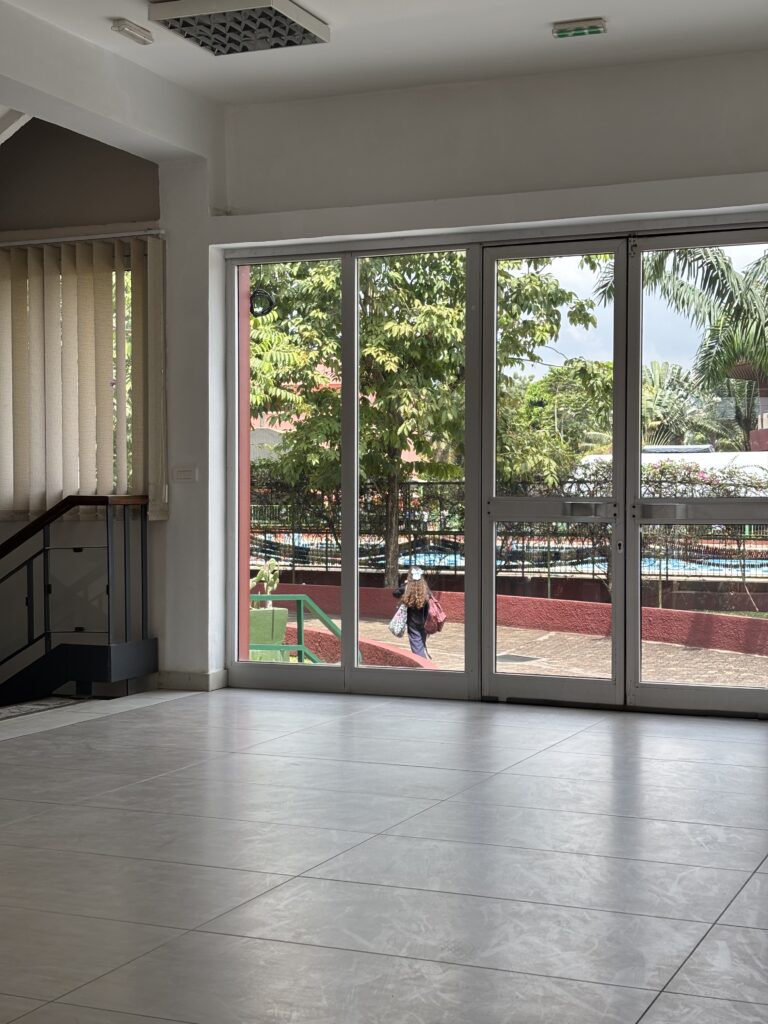
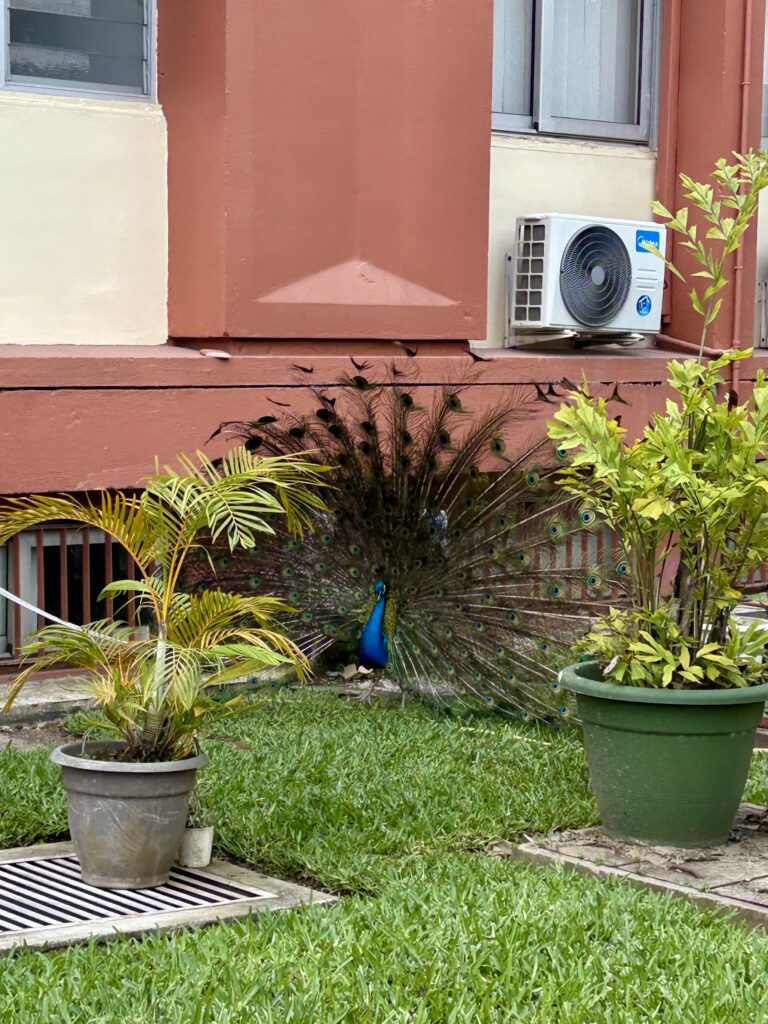
On my way, I caught glimpses of everything at once. The peacock was still there, as beautiful as it had been twenty-five years ago. I saw the swimming pool where we would all run around that wet floor and get scolded at and reluctantly end up behaving well. I saw the main fountain, where an old-fashioned plane used to hang—a symbol of the campus’s past as an airport, now gone. I saw the large cafeteria hut where the director of the school, Madame P., would supervise our meals, where she once corrected my table manners as I brought my mouth down to the plate to gather the last of my sauce. In just five seconds on the campus, I was overwhelmed with memories. I found myself wondering what it would have been like to walk through it freely. A single day would not have been enough—I would have returned every day of my stay in Ivory Coast.
In November 2004, this was where I was—a child at school, spending an ordinary, peaceful day with my closest friends—when everything changed. The campus was attacked, and we fled as conflict broke out. In that moment, I lost all of them. I had many friends with whom I shared a happy childhood, but the one I cherished most was Marine, a girl from the French suburbs Borbeaux. Marine lived at the Carena site, where ships in Abidjan were built and repaired, as her father worked there. Marine had a deep love for the ocean, especially dolphins, and she was the one who introduced me to that world. Because of her, I later grew to love biology and even dreamed of becoming a marine biologist. Whenever I visited her house, we would watch documentaries about dolphins and the ocean, and she would explain everything she had learned. Even as a child, she already seemed like a little expert on dolphins.
Her brother Jonathan would often play with us in their yard and invite us to see the treehouse he and his father had built. The yard itself was simple, almost barren, but it had a large tree with a small house perched in its branches. Beyond it stretched the lagoon, with its great ships—just enough to spark our imaginations and carry us into whatever adventures we dreamed up beyond the horizon. Jonathan had a Japanese friend named Sami, and together we would play tennis. I visited that same court after leaving the campus that day.
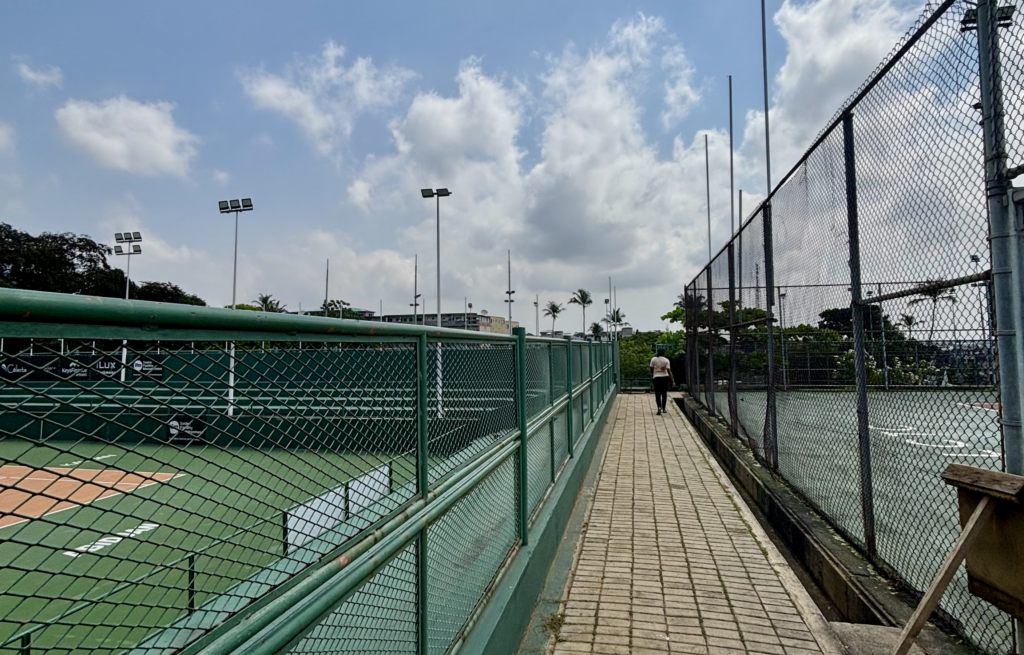
Marine was extremely athletic, so much so that she often played tennis better than Jonathan or Sami. They were always competing with one another, and on the rare days she lost, she would be furious to death. I would try to comfort her, reminding her that she won far more often than she lost, but she would remain stubbornly frustrated—drinking her water with uncontrollable anger, grumbling about everything. It was simply one of the many ways her passion showed itself. Marine was also different from the other girls, who were more conventionally “girly,” and they often bullied or mocked her, even calling her a lost soul for not believing in God (Marine did not have a religion). But Marine would just shrug and say, “Uh, je m’en fous.” I would have been deeply hurt in her place, but she was unaffected. That defiance stayed with me for a very long time.
Marine and I were different in many ways—from nationality to personality—but we got along effortlessly. Our friendship was never something I was aware of at the time; it simply existed. I played with her because she was there, and when she wasn’t—on weekends—I didn’t think much about it. But on school days, we would fall right back into our shared world: dolphins, games, and her fierce competitions with her brother and his friend, while I remained somewhere in the middle of their loud, energetic lives. I must have played my part too, but I barely remember myself in those moments. In the scenes of my childhood, I see the three of them so clearly, but not myself. I often wonder how they remember me, if at all. Perhaps I was just as loud and competitive as they were. Until I know, I am left with only fragments of my own perspective—that of a timid little Asian girl.
Oh, how I miss Marine! How I miss my dearest childhood friend.
One night during my stay in Ivory Coast, I dreamed that I met Marine on the street. I greeted her with joy, so happy to see her again. But she did not recognize me. I told her who I was—her Korean friend from Mermoz—and she tilted her head with a sorry-I-really-wish-I-could-remember-but-I-don’t look. Then the dream faded. I woke up quite sad that day.
While the first days of my visit were marked by visible change, the later days became an appreciation of what had endured. Those remnants carried me back to my childhood—beautiful, warm, vivid memories that will shine in my heart forever. As time changes all things and the past is erased beyond reach, certain ephemera—however fleeting in life—remain eternal, their light only growing stronger with the years.
Leave a Reply