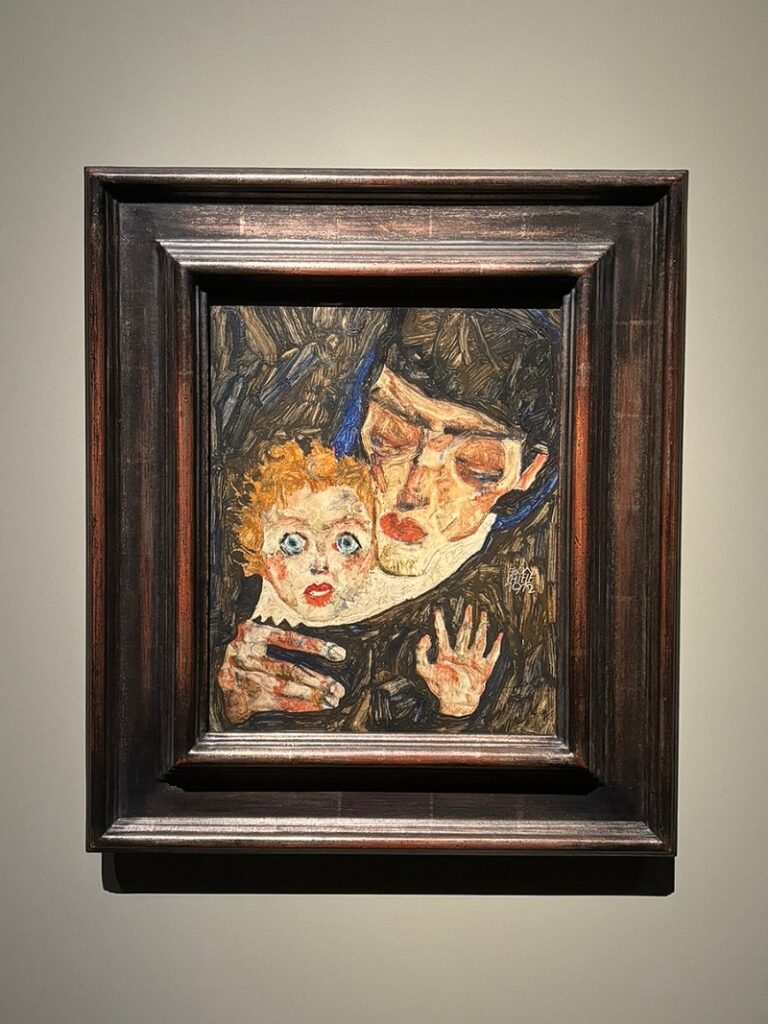
For the first time, I saw a painting of an image I’ve known since childhood—an image incredibly familiar, yet never visualized before. It sometimes appears in my mind like a sudden seizure, though I have no idea why. The image presses down on my entire brain, like the expression of the child. hen this powerful image comes, there’s nothing to do but wait for it to pass.
–
I could feel the wounds even on the startled face of the child—wounds from childhood.
If the wounds evoked by Jan Sturs’ sculpture 〈Wounded Man〉 come from “existence,” then the wounds the child experiences in Egon Schiele’s work seem to come from “absence.” Perhaps the child is hurt not by what exists, but by what is missing—the things the child assumed would always be there, while an adult is hurt by the weight of existence they wish to erase.
One thing I notice frequently in museums is wounds. Art can fully express a psychological state; it’s enough to make me understand why art therapy exists. Sometimes the expression is so raw that it overwhelms me, sometimes it conveys courage and intensity so strongly that I am moved to tears. Perhaps that is the greatness of art.
The mother holding the child has her eyes closed, her expression calm. Does she know, even as she feels the wounds the child must endure, that there is little she can do to help?
This post deserves way more attention honestly.
This answered questions I had for weeks.